Unraveling Mysteries: How Puzzles Increase Creativity and Analytical Ability

The Cognitive Benefits of Solving Puzzles
Puzzles have long captivated humans across cultures, acting not just as a pastime but also as powerful instruments for mental development. In a world that moves at lightning speed, the ability to think critically, innovate, and solve problems has never been more essential, impacting both academic and professional trajectories.
Research underscores the advantages of engaging with puzzles on a cognitive level. For instance, solving complex challenges stimulates the brain’s problem-solving regions, fostering innovative thinking. This is particularly significant for students and professionals who regularly navigate intricate tasks. One study published in the journal “Psychological Science” suggests that individuals who regularly engage in puzzle-solving display greater aptitude in unrelated problem-solving tasks, demonstrating that the benefits extend beyond the immediate challenge.
In addition to problem-solving, puzzles are linked to enhanced memory. The act of remembering clues, patterns, and the steps needed to complete a task not only reinforces memory pathways but also equips individuals with better retention abilities. For instance, people who frequently solve crosswords often show improvement in verbal memory and can recall information more effectively in daily life.
Moreover, the concentration required in puzzle-solving cultivates an increased focus. As individuals work through a puzzle, their attention to detail sharpens, training them to filter out distractions. This skill becomes particularly valuable in environments rife with interruptions, such as classrooms or workplaces in bustling cities like Lagos or Abuja. The rigorous focus developed through puzzles can seamlessly transition into enhanced productivity and performance in both academic circles and corporate settings.
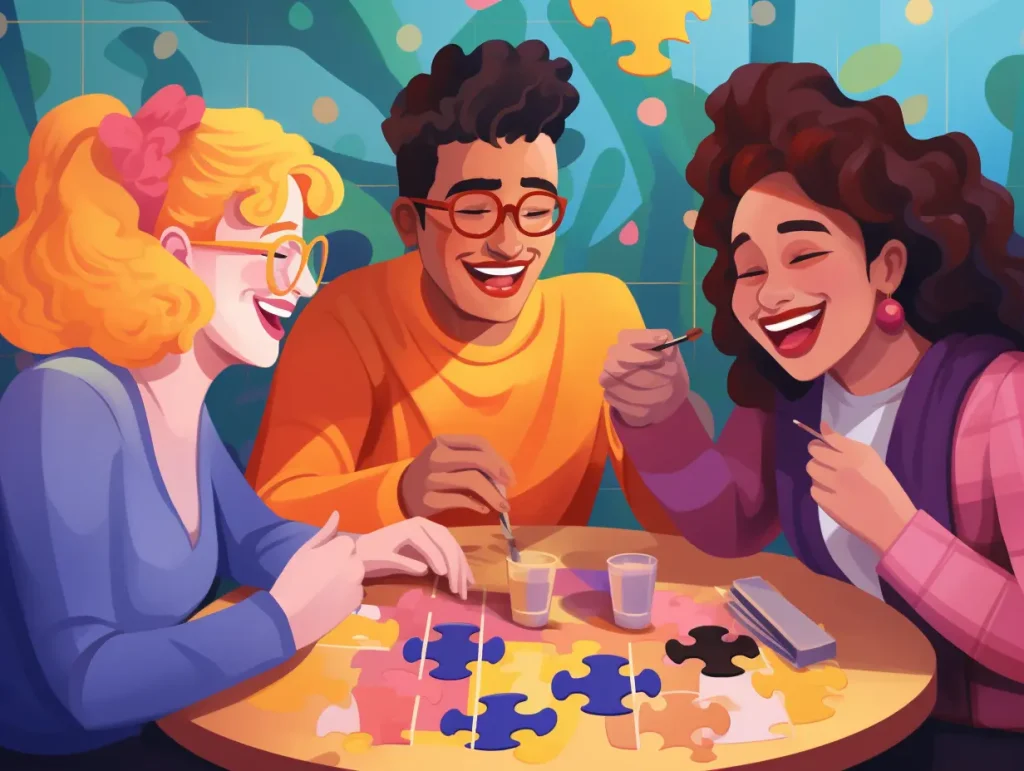
In Nigeria, traditional puzzles such as “Amala” riddles not only entertain but also serve as tools for cultural transmission and community interaction. These riddles often provoke laughter and lively debate, reinforcing social bonds while simultaneously stimulating cognitive processes. Similarly, modern jigsaw puzzles have gained popularity, promoting collaborative endeavors among family and friends during leisure time. The combination of social interaction and cognitive exercise creates a rich environment for creative exploration.
As we further explore the fascinating realm of puzzles, we begin to understand their profound impact on cognitive growth. Regardless of age or background, engaging with puzzles can unlock and enhance mental capabilities, making them not just a hobby, but a gateway to personal and intellectual development. Interested in discovering how puzzles can reshape our minds? Stay tuned for further insights that delve deeper into this captivating topic.
CHECK OUT: Click here to explore more
Unlocking Creative Potential Through Puzzle Challenges
Puzzles are not just mere entertainment; they are gateways to unleashing our creative potential and honing our analytical skills. In a world rich with information yet rife with distractions, the practice of engaging with puzzles stands out as a vital exercise for mental acuity. Recent studies have highlighted that individuals who regularly engage in puzzle solving not only adapt to challenges more effectively but also exhibit enhanced creative thought processes.
At the heart of this phenomenon lies the concept of divergent thinking, which refers to the ability to generate multiple solutions to a problem. Puzzles, whether they are logic games, crosswords, or intricate jigsaw challenges, demand a level of creativity that can stretch an individual’s cognitive capacities. For example, a 2022 study published in the “Journal of Creative Behavior” found that adults who worked on complex jigsaw puzzles exhibited a notable increase in their capacity for divergent thinking and ideation. This enhancement in creativity is crucial, especially in today’s ever-changing job market, where innovative problem-solving is sought-after.
Moreover, puzzles encourage analytical reasoning, sharpening our capability to evaluate various components and their interconnections. This skill is particularly relevant in fields such as science, technology, engineering, and mathematics (STEM)—areas that are increasingly vital in Nigeria’s burgeoning economy. When individuals tackle puzzles, they learn to identify patterns, assess relationships, and derive solutions based on logical assessments. Over time, this practice can translate to better decision-making skills and a heightened ability to innovate, traits that are highly coveted in various professional settings.
Consider the following advantages that puzzles offer in enhancing creativity and analytical ability:
- Improved Problem-Solving Skills: Regular engagement with puzzles fosters a mindset geared toward tackling challenges head-on.
- Enhanced Pattern Recognition: Puzzles often involve recognizing patterns, a critical skill that can be applied in data interpretation and strategy formation.
- Increased Brain Connectivity: Solving puzzles stimulates different parts of the brain, encouraging connectivity that enhances overall cognitive function.
- Boosted Motivation and Persistence: The satisfaction that accompanies solving a challenging puzzle can improve motivation and the ability to persist in the face of difficulties.
Despite the plethora of modern entertainment options available, the act of solving puzzles—whether alone or collaboratively—creates a unique context for mental enrichment. In Nigeria, traditional puzzle formats are not only an avenue for entertainment but serve as cultural expressions that can enhance cognitive functions across generations. The interplay of creativity and analytical skill engendered through puzzles equips individuals to navigate the complexities of modern life effectively.
As we delve deeper into the multifaceted benefits of puzzles, it becomes increasingly clear that they hold the key to enhancing our cognitive abilities in ways that extend far beyond simple enjoyment. This exploration promises to reveal more about how puzzles can transform our thinking processes, unlocking new pathways for creativity and analytical reasoning. Stay tuned for further insights that will unravel the depths of this captivating subject.
Unraveling Mysteries: How Puzzles Increase Creativity and Analytical Ability
Puzzles have long been regarded as tools for entertainment, but their benefits extend far beyond mere enjoyment. Engaging in puzzles actively stimulates the brain, enhancing creative thinking and analytical problem-solving skills. By exercising these abilities, individuals not only entertain themselves but also enrich their cognitive functions in profound ways. The process of solving puzzles often requires divergent thinking, which is the ability to generate multiple solutions to a problem. This creative approach can lead to innovative ideas both in personal and professional contexts.
Cognitive Development through Puzzle Solving
Research has consistently shown that regular engagement with puzzles can lead to improvements in various cognitive abilities. As individuals tackle increasingly complex puzzles, they develop a deeper understanding of structural relationships and logical sequences. This mastery of logical reasoning is crucial not just in mathematics but in every field that demands critical thinking. Furthermore, puzzles enhance memory retention and sharpen focus, both of which are essential in today’s fast-paced world filled with distractions.
Longevity of Mental Agility
Interestingly, studies suggest a correlation between puzzle-solving activities and a lower risk of cognitive decline as people age. By regularly activating various regions of the brain, seniors who engage in puzzles may stave off the undesirable effects of aging-related brain diseases like dementia. This advantage highlights the vital role of puzzles in maintaining mental agility and further establishes their significance beyond mundane entertainment.
| Category | Benefits |
|---|---|
| Cognitive Enhancement | Improves critical thinking and logical reasoning skills |
| Creativity Boost | Encourages divergent thinking and innovative problem-solving strategies |
As we delve deeper into the relationship between puzzles and cognitive abilities, it becomes clear that these challenges serve as a unique gateway to unlocking the mind’s full potential. Engaging with puzzles not only entertains but enriches the fabric of our thinking skills, revealing the apposite connection between pleasure and mental growth.
RECOMMENDED: Check out this similar article
Puzzles as Tools for Cognitive Flexibility
The role of puzzles in enhancing cognitive flexibility—the mental ability to switch between thinking about different concepts or to think about multiple concepts simultaneously—is just as crucial as creativity and analytical skills. Cognitive flexibility allows individuals to approach problems from various angles, a skill that is crucial not only in personal situations but also in professional environments where innovation is key. For instance, in Nigeria’s competitive tech industry, where adaptability is paramount, professionals who regularly engage with puzzles are likely to be more resourceful in dynamic settings.
Furthermore, engaging with puzzles can support the development of executive functions, which include planning, attention, problem-solving, and multitasking. A comprehensive review published in the “Frontiers in Psychology” revealed that individuals who partake in regular puzzle-solving activities show significant improvements in these cognitive domains. The multitasking required in navigating complex puzzles can strengthen connections in the brain, reinforcing pathways responsible for cognitive control. This is particularly relevant in educational frameworks where fostering multidisciplinary skills is fundamental to developing well-rounded individuals.
Puzzles also serve as a unique method for enhancing spatial reasoning, a skill particularly advantageous for careers in architecture, design, and engineering. The ability to visualize and manipulate pieces mentally, such as when assembling a jigsaw puzzle or figuring out the layout of a crossword, translates into improved performance in spatial tasks. In Nigeria, where urban development is rapidly evolving, individuals capable of mastering spatial reasoning through puzzles may find themselves better equipped to contribute to infrastructure planning and development initiatives.
Moreover, puzzles facilitate social interaction and collaboration, enhancing team dynamics. Group puzzle challenges encourage communication, negotiation, and collective problem-solving, significantly benefitting workplaces and educational settings. As highlighted by research from the “International Journal of Educational Research,” collaborative puzzle-solving not only sharpens analytical skills but also promotes a sense of community and shared achievement among participants. In the context of Nigeria’s increasingly collaborative workspaces, leveraging puzzles as a team-building exercise can foster camaraderie and boost collective creativity.
The commercial success of puzzle-oriented games, especially in mobile applications and social media, reflects their exponential appeal. In Nigeria, platforms such as “QuizUp” and various online Sudoku forums are examples of how individuals use puzzles as a source of fun and social bonding. Such interactive environments not only provide cognitive stimulation but also create communities centered around shared interests in problem-solving and creativity.
Lastly, the benefits of puzzles are not confined to structured experiences—everyday problem-solving can also be a puzzle. Whether it’s the intricacies of maintaining a family budget or devising ways to optimize time management, the skills honed through puzzle interaction can enhance everyday decision-making and planning strategies. Individuals can leverage these learned skills to approach real-life challenges with renewed creativity and analytical prowess.
The undeniable relationship between puzzles and cognitive development presents an exciting opportunity for individuals and communities. By incorporating puzzles into daily routines—be it through family game nights, school programs, or casual competitions—one can unlock a treasure trove of mental benefits that foster both creativity and analytical ability. As we continue to explore this multifaceted topic, the potential of puzzles to reshape our thinking processes becomes even more apparent.
LEARN MORE: This related article may interest you
Conclusion: The Multidimensional Impact of Puzzles
In summary, the exploration of puzzles as instruments for enhancing creativity and analytical ability reveals a rich landscape of cognitive advantages that are both profound and practical. By regularly engaging with various puzzles, individuals not only sharpen their problem-solving skills but also nurture cognitive flexibility and executive functions—essential tools in our rapidly evolving world. The socio-cultural dynamics, particularly in Nigeria’s competitive environments—from the tech industry to urban planning—benefit immensely from the diverse skill set that puzzles cultivate.
The significance of puzzles extends beyond mere entertainment; they contribute to strengthening team dynamics and promoting communal bonding through collaborative problem-solving. As communities embrace puzzles in group settings—be it in classrooms or workplaces—there lies a unique opportunity to foster a culture of innovation, collaboration, and mutual achievement. With the rise of mobile puzzle applications, Nigerians are not only finding joy in these activities but are simultaneously developing critical thinking skills in engaging and accessible ways.
Ultimately, it is clear that integrating puzzles into our daily lives offers a dual advantage—encouraging personal growth while enhancing our collective capabilities. As we continue to unravel the mysteries that puzzles hold, we invite everyone to embrace this dynamic tool for cognitive development. So, whether through casual gaming or structured challenges, the mental treasure trove that puzzles provide can unlock a future filled with creativity and insightful decision-making.