The Neuroscience of Puzzles: How Solving Jigsaw Puzzles Can Enhance Memory Capacity
The Cognitive Benefits of Engaging with Jigsaw Puzzles
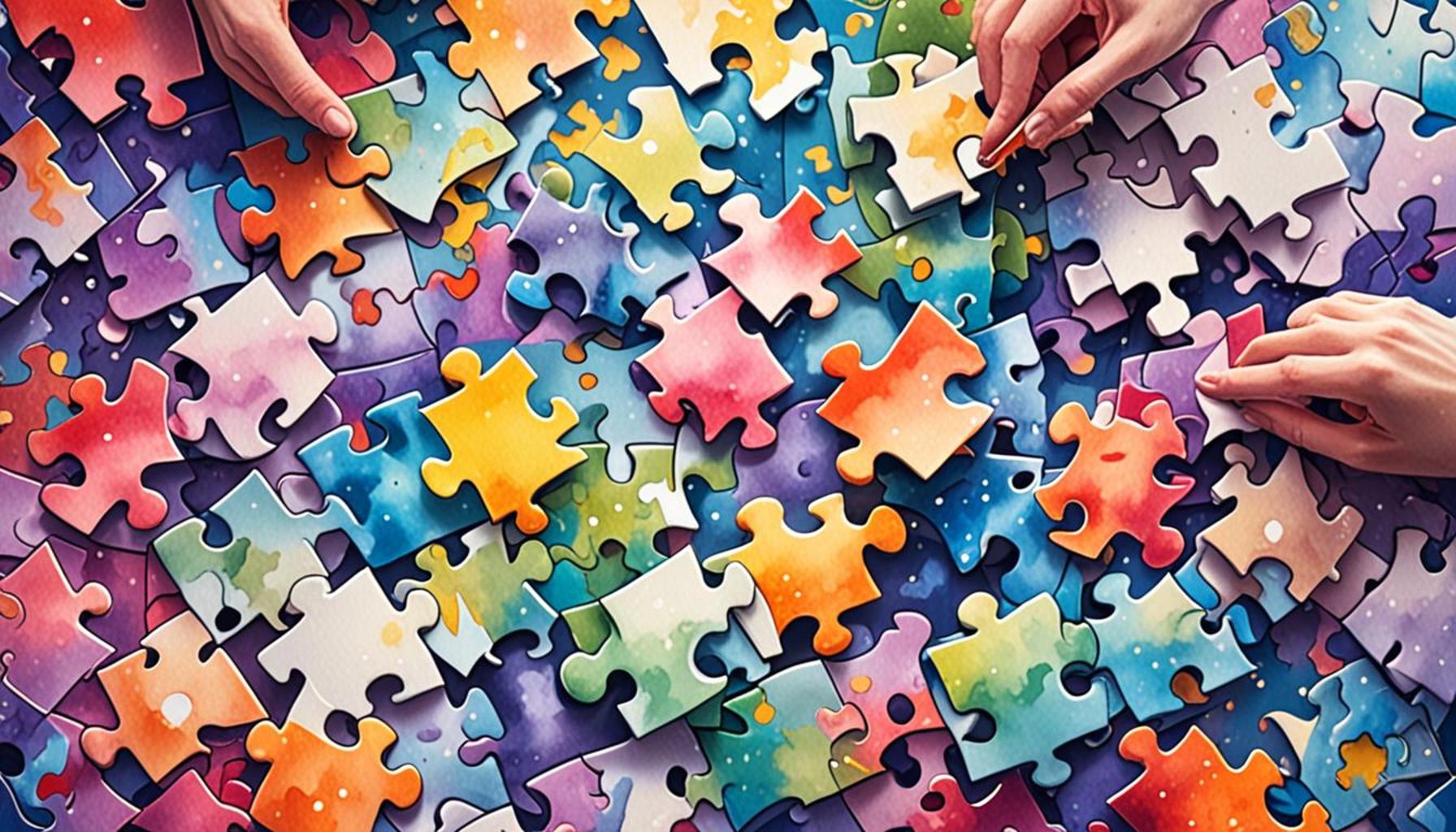
Engaging with jigsaw puzzles transcends a simple hobby; it is a powerful way to enhance mental acuity and emotional well-being. Recent studies illustrated in fields like cognitive psychology suggest that activities like these tap into intricate neuroscience pathways, which can lead to significant advancements in memory capacity. When we intricately connect the various pieces of a puzzle, our brains undergo a stimulating workout akin to a physical exercise, thus promoting crucial cognitive functions vital for maintaining mental health.
Let’s explore the multifaceted benefits gained from solving jigsaw puzzles:
- Enhanced Problem-Solving Skills: Every puzzle presents a unique challenge that requires strategic thinking and decision-making. This analytical approach not only sharpens our cognitive abilities but can also be beneficial in everyday decision-making processes.
- Improved Visual-Spatial Reasoning: While placing pieces based on their shapes and colors, we cultivate better visual memory and spatial awareness. This skill is essential for navigating our environment, from driving to geometry in academics.
- Increased Memory Retention: Regular engagement with puzzles can greatly enhance both short-term and long-term memory. Research has shown that those who continuously challenge themselves with puzzles can experience fewer signs of cognitive deterioration as they age.
In Nigeria, the growing appeal of jigsaw puzzles is not merely about enjoyment; it serves as significant mental exercise for individuals spanning all ages. Educational institutions and community centers across the nation are increasingly integrating puzzle-solving into their curriculums, thereby acknowledging its importance for brain development and social interaction. Parents are also recognizing the value of puzzles in enhancing their children’s focus, fostering teamwork, and encouraging patience, qualities essential in a rapidly changing society.
Delving deeper into the neuroscience of puzzles unveils how assembling each piece contributes to a greater cognitive profile—not only in the context of jigsaw completion but also in enhancing our mental capabilities and nurturing a culture of lifelong learning. As individuals engage in this communal activity, they promote social connectivity and cognitive resilience, key ingredients for thriving in today’s world. Thus, the simple act of piecing together a jigsaw puzzle can lead to profound mental benefits that ripple through various aspects of life.
SEE ALSO: Click here to read another article
The Science Behind Memory Enhancement Through Puzzles
To understand how jigsaw puzzles can enhance our memory capacity, we must delve into the cognitive mechanisms that govern our brain’s function. Neuroscience researchers have shed light on how engaging with puzzles stimulates brain activity, particularly in the areas associated with memory storage and retrieval. When attempting to place pieces together, our brains ignite complex networks that involve visual processing, problem-solving, and memory recognition. This type of cognitive engagement can perform like a mental refresh, sharpening our mental acuity over time.
One of the key theories in this area is the concept of neuroplasticity. This refers to the brain’s ability to reorganize itself by forming new neural connections in response to learning and experience. As we engage in solving jigsaw puzzles, we actively challenge our minds, which can facilitate the development of these new pathways. Each time we solve a puzzle, we reinforce the connections among neurons in our brain, potentially leading to improved cognitive function and enhanced memory retention.
Additionally, engaging in puzzles activates the brain’s reward system. The satisfaction of finding the right piece not only gives a sense of accomplishment but also triggers the release of dopamine, a neurotransmitter associated with pleasure and motivation. This reward response encourages us to continue solving puzzles, further solidifying our learning and enhancing our cognitive capacities over time.
Several studies have emphasized the positive correlation between jigsaw puzzle engagement and memory enhancement. Some of the key findings include:
- Active Brain Training: Studies show that individuals who regularly participate in puzzle activities demonstrate greater proficiency in tasks related to memory and visual processing.
- Delayed Cognitive Decline: Longitudinal studies indicate that those who frequently engage in cognitive activities, including jigsaw puzzles, may experience a slower progression of cognitive decline in older age.
- Increased Attention Span: Solving puzzles requires sustained focus and attention to detail, which can improve our ability to concentrate on other tasks.
In Nigeria, as more families adopt jigsaw puzzles into their daily routines, there are promising implications for the mental capacity of young and old alike. Schools are exploring strategic ways to integrate puzzle-solving into their educational systems, transforming learning into an interactive and engaging experience. The intrinsic value of puzzles transcends pure entertainment, positioning them as tools to enrich our cognitive lives.
As we consider the broader impact of puzzles on our memory and overall cognitive health, it becomes increasingly clear that the simple act of piecing together a jigsaw is more than just play; it is a remarkable exercise for our brains. Whether we are solving a puzzle with children, friends, or on our own, we are participating in a profound cognitive process that can enhance not only memory but also our overall mental well-being.
While jigsaw puzzles may seem like mere entertainment, they are deeply rooted in beneficial cognitive processes. Engaging with puzzles stimulates several brain areas, enhancing memory capacity and promoting cognitive growth. When individuals work on jigsaw puzzles, they engage in a unique blend of visual perception and spatial reasoning, which helps improve working memory and overall brain function.One important aspect of solving jigsaw puzzles is the activation of multiple brain regions. Neuroimaging studies have shown that puzzle-solving engages the prefrontal cortex, which is responsible for planning, decision-making, and problem-solving. Additionally, the occipital lobe, which processes visual information, works in tandem with the parietal lobe, supporting spatial awareness. This multifaceted stimulation not only enhances memory retention but also strengthens neural connections, fostering healthier brain aging.Moreover, the practice of putting together a puzzle can boost concentration and focus. As solvers sift through countless pieces, they train their minds to block out distractions and hone in on their tasks. This level of engagement can significantly enhance cognitive control, allowing for better memory encoding and recall. Furthermore, solving puzzles often requires applying problem-solving skills and critical thinking, which are essential for daily life tasks. The integration of these cognitive skills encourages holistic brain development.Importantly, solving puzzles provides a soothing effect, acting as a form of mindfulness practice. This relaxation can significantly benefit cognitive performance, as stress and anxiety negatively impact memory retention. By engaging in jigsaw puzzles, individuals can find both entertainment and mental exercise, a unique combination that not only enhances memory but also contributes to mental resilience. The benefits extend far beyond mere enjoyment—every piece assembled is a step toward a healthier, more capable mind. In summary, the neuroscience behind jigsaw puzzles reveals a rich landscape of cognitive benefits. As the brain rewires itself in response to puzzle-solving, it gradually builds a more substantial memory capacity, equipping individuals with the tools necessary for better learning and memory retention. Embracing jigsaw puzzles can, therefore, be seen as not just a pastime, but a strategic approach to improving mental acuity. As we explore this intriguing intersection of neuroscience and leisure, the potential for growth and enhancement remains vast and inviting.
YOU MAY ALSO LIKE: Read read another article
Unlocking Cognitive Benefits Through Consistent Engagement
Continuing our exploration of the cognitive benefits that come from solving jigsaw puzzles, it’s essential to recognize the role of consistency in engagement. Regularly dedicating time to puzzle-solving can create a rhythm that strengthens cognitive functions over time. A growing body of evidence suggests that individuals who incorporate puzzles into their daily routines experience more substantial and lasting improvements in their memory capacity. Similar to a workout routine for physical fitness, making puzzles a regular activity helps maintain and enhance brain health.
Moreover, the impact of social interaction while solving jigsaw puzzles should not be overlooked. Engaging with family and friends during puzzle-solving sessions can amplify the cognitive benefits. Collaborative efforts foster communication and teamwork, which also stimulate areas of the brain related to social cognition. In a Nigerian context, families often gather around tables for communal puzzle-solving sessions during festivities and long holidays, creating not just lasting memories but also a neural workout. The interactive aspect allows for sharing strategies, which can further enhance problem-solving skills and memory retention.
Additionally, research indicates that the complex visual patterns present in jigsaw puzzles help hone visual-spatial skills, which are pivotal for memory. The brain must analyze details, colors, and shapes of puzzle pieces, presenting an opportunity for visual memory enhancement. For instance, when trying to recall a specific piece, our brains utilize visual memory to associate shapes and colors with known locations on the board. This mental navigation augments neural connections related to memory, ensuring that our cognitive skills are honed.
When we consider the aging population, it becomes critical to explore how jigsaw puzzles can act as a buffer against cognitive decline. Studies have suggested that maintaining an active mind through puzzles could lead to a protective effect on cognitive health. In Nigeria, where the elder demographic is often actively engaged in family life, introducing puzzles to elder routines can encourage mental stimulation. The act of remembering past family events while solving puzzles related to family history can further foster emotional connections, creating a dual benefit of both emotional and cognitive support.
Furthermore, the act of breaking down complex problems into smaller, manageable parts inherent in puzzle-solving enhances critical thinking abilities. Jigsaw puzzles require participants to develop strategies and adapt to new information as they progress, strengthening their ability to analyze various aspects before reaching a conclusion. Such skills are vital not only in daily life but also in academic and professional settings, particularly as global demands increase in complexity.
- Improved Visual Memory: Engaging with puzzles can significantly enhance our ability to remember visual information, which is crucial for tasks in daily life.
- Social Engagement: Collaborative puzzle-solving sessions can improve communication skills and foster stronger relationships while benefiting cognitive health.
- Complex Problem Solving: The skills developed through jigsaw puzzles can translate to critical thinking and analytical skills valuable in academic and career pursuits.
As Nigerian families continue to recognize the multifaceted benefits of jigsaw puzzles, it becomes evident that these deceptively simple activities are actually vital cognitive workouts. They provide not just entertainment, but essential mental training, paving the way for enhanced memory capacity and overall brain health.
CHECK OUT: Click here to explore more
Conclusion: Puzzles as Catalysts for Cognitive Enhancement
In summary, the fascinating interplay between jigsaw puzzles and neuroscience reveals a treasure trove of cognitive benefits that extend beyond mere entertainment. As we’ve explored, the act of solving these intricate challenges not only sharpens visual memory but also enhances critical thinking, problem-solving skills, and social interactions. By regularly incorporating puzzle-solving into daily routines, individuals can experience profound improvements in their memory capacity, similar to how consistent physical exercise bolsters physical health.
Furthermore, the communal aspect of puzzles within the Nigerian context serves to strengthen familial bonds and encourage engaging conversations, enriching the social fabric while boosting cognitive performance. It is evident that solving jigsaw puzzles offers a dual advantage—providing both emotional warmth and mental stimulation, particularly for the aging population who benefit significantly from such mental workouts.
As families gather around tables, piecing together memories while completing their puzzles, they participate in a timeless tradition that not only cultivates creativity but also invites rich storytelling that enhances memory retention. Thus, jigsaw puzzles should not be an afterthought; rather, they can be embraced as essential tools for cognitive vitality. As we continue to look for effective ways to enhance our brain health and memory capacity, puzzles stand out as a simple yet powerful activity worthy of our attention.
In this era where staying mentally agile is paramount, a closer examination of the role puzzles play in memory enhancement invites everyone—from children to the elderly—to harness their brain’s potential through engaging in this enjoyable pastime.